

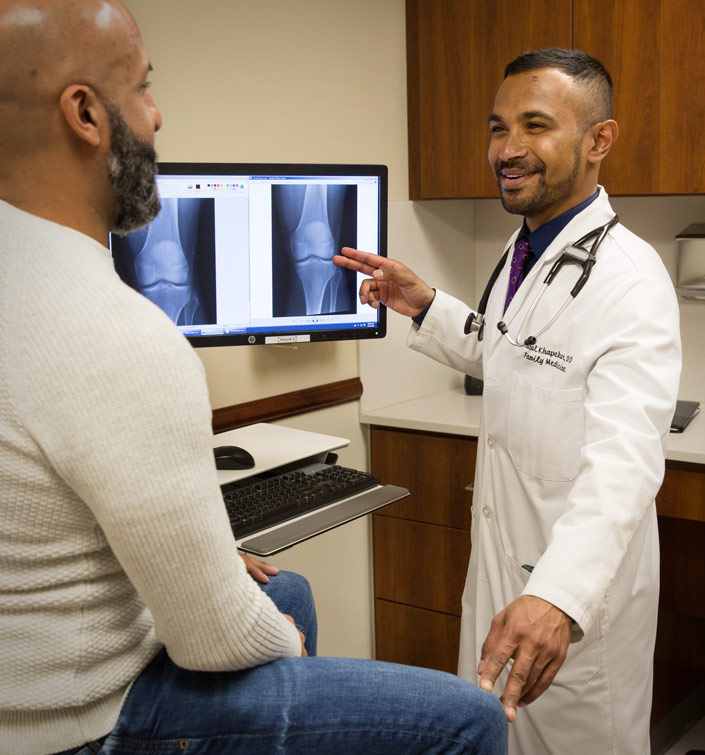


Osteopathic physicians, or DOs (doctors of osteopathic medicine), work in partnership with their patients. They consider the impact that lifestyle and community have on the health of each individual, and they work to erase barriers to good health.
The Whole-Person Approach
From the first days of medical school, DOs are trained to look at the whole person and integrate them into the health care process as a partner. They see each person as more than a collection of body parts that may become injured or diseased. Osteopathic medical students receive classroom training in communicating with patients, and they practice these skills with simulated patients.
Because of this whole-person approach to medicine, approximately 60% of all DOs choose to practice in the primary care disciplines of family practice, general internal medicine, and pediatrics.
Unique Features of Osteopathic Medicine
One key concept in osteopathic medicine is that structure influences function. Thus, if there is a problem in one part of the body's structure, then function in that area will also be affected. Osteopathic medical students learn osteopathic manipulative medicine, a system of hands-on techniques that help alleviate pain, restore motion, and help the body function more efficiently.
Another tenet of osteopathic medicine is the body's innate ability to heal itself. Many of osteopathic medicine's techniques are aimed at reducing or eliminating the impediments to proper structure and function so the self-healing mechanism can assume its role in restoring the person to health.
What do Osteopathic Medical Students Study?
Osteopathic medical students take courses in:
Anatomy
Physiology
Microbiology
Histology
Clinical skills
Physician/patient communication
Pharmacology
Major systems of the body (cardiovascular, respiratory, genitourinary, etc.)
Osteopathic principles and practices
Osteopathic manipulative medicine